
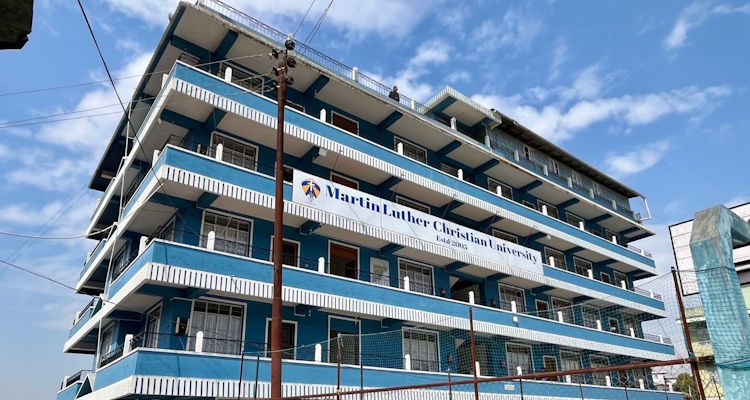
Client: Martin Luther Christian University (MLCU)
Location: Shillong, Meghalaya
Solution: scanix Bus QR Attendance System with Fees Addon
Fleet: [XX] buses, [XX] routes
Live since: Aug 2026
Every boarding is recorded and every card is checked for fee status, even on hill roads where the mobile signal drops out.
About the Client
Martin Luther Christian University (MLCU) was established in 2005 by an Act of the Meghalaya Legislative Assembly and is recognised by the UGC under Section 2(f). It is based in Shillong and offers multidisciplinary programs to students from across Meghalaya and the North-East. It was the first educational institution in Meghalaya to implement the National Education Policy 2020, and it has been listed among the top private universities in India.
Many MLCU students commute daily on university buses that run through the hills in and around Shillong.
The Challenge
Mobile signal you cannot count on
Meghalaya is mostly hills, and bus routes pass through valleys, forested stretches and curving roads where mobile data is weak or disappears for long stretches. Cloud-based systems that need a live connection for each scan fail in exactly the places buses spend most of their time. Boarding cannot wait for a signal to come back.
Knowing who is actually on the bus
With students boarding at many stops across several routes, paper lists and manual head counts could not give a reliable record of who boarded, where and when. Transport staff had no easy way to confirm that the people riding were students registered for bus service.
Bus fees that were hard to enforce
Bus fees were collected in the finance office, but there was no link between that ledger and the bus door. Staff on board could not tell whether a student had paid, so following up on unpaid fees meant reconciling lists by hand at the end of the term.
The Solution
MLCU deployed the scanix Bus QR Attendance System along with the scanix Fees Addon. Each student carries an ID card with a unique, fixed QR code. The bus operator (the driver or conductor) carries the scanix mobile app and scans each card as the student boards. Buses need no extra hardware installed.
How a boarding works
- The student shows their QR card at the bus door.
- The operator scans it with the scanix app. The result appears in under a second.
- The app shows the fee status for that student straight away. A Fees Paid result shows in green. A Fees Due result is flagged clearly, so the operator can act according to the university’s policy.
- The boarding is logged with the time, bus and route, and added to the student’s transport attendance record.
Offline-first, built for the hills
The scanix app is designed to keep working when the network drops out:
- Everything needed is stored on the phone. Whenever the operator’s phone has a connection, the app downloads the latest list of students on that route and their bus fee status, and keeps it on the device.
- Scans work without any signal. Each QR card is checked against the list on the phone, so the operator gets the same instant result and fee status whether or not the phone is online.
- Nothing is lost. Scans made offline are saved on the phone with their original time and bus details.
- Automatic sync. As soon as the bus reaches coverage, the saved scans upload to the scanix cloud in the background and any pending notifications go out. The operator does not have to do anything.
- Fee status stays current. Each sync also pulls the latest fee updates from the finance office, so a payment made in the morning shows up on the next connected run.
Fee status on every scan
- Linked to the bus fees ledger in scanix, so the finance office and the bus crew see the same information.
- Grace periods set by the university, so students are flagged only once a fee is overdue beyond the allowed window.
- Every fee check is logged, giving the finance and transport teams a complete, time-stamped record for every student and route.
What changed
- Reliable records on every route. Weak signal no longer means missing data. Every boarding is captured, even in the most remote stretches.
- Fee compliance enforced at the bus door. Because fee status is checked on every scan, overdue fees are resolved faster, with less chasing by the finance office.
- Accurate ridership data. The transport office can see who rides which route and when, which helps with route planning and fleet decisions.
- No new hardware. Printed QR cards and a phone per bus were all it took, so rollout across the fleet was fast and low-cost.
“[Testimonial from Registrar / Transport In-charge / Finance Officer at MLCU. Approved quote only.]”
— [Name], [Designation], Martin Luther Christian University
Why It Works for Hill and Rural Campuses
Many institutions in the North-East and other hilly or rural regions run bus routes where connectivity cannot be guaranteed. The MLCU deployment shows that a transport attendance system does not need a constant internet connection to be accurate. Because the app works offline first and checks fee status on each scan, every trip is recorded and every rider is verified, wherever the route goes.
Run Buses Through Low-Connectivity Areas?
See how scanix Bus QR Attendance can track your fleet, online or offline. Learn more or book a demo.
← Go to Case Studies Next Case Study : How Sharda University manages BDS & MDS attendance using the scanix QR Attendance System →
More Case Studies
Other case studies you may also like
No signal, no problem: how Martin Luther Christian University tracks bus boarding and fees with scanix
Martin Luther Christian University in Shillong uses the scanix Bus QR Attendance System to record every boarding, even on hill routes with no mobile signal. Each QR card scan also shows the student's fee status, so overdue bus fees are caught at the ...
Continue reading about No signal, no problem: how Martin Luther Christian University tracks bus boarding and fees with scanix →
How Sharda University manages BDS & MDS attendance using the scanix QR Attendance System
Sharda University's School of Dental Sciences uses the scanix QR Attendance System to track BDS and MDS attendance across lectures, labs and clinical postings. Rotating QR codes and geo-fencing stop proxy attendance, and automatic reports flag studen...
Continue reading about How Sharda University manages BDS & MDS attendance using the scanix QR Attendance System →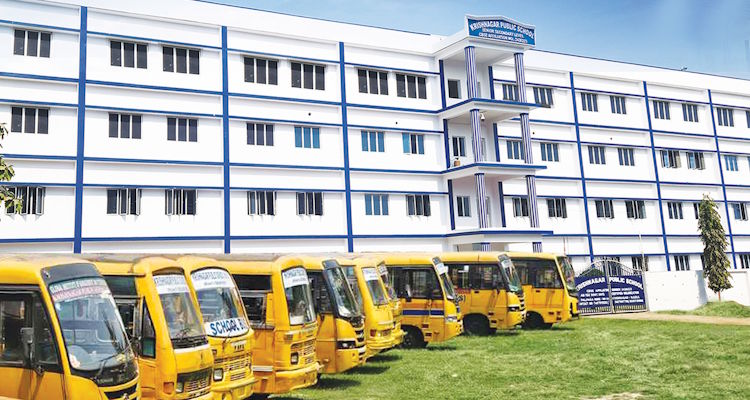
How Krishnagar Public School tracks 2,500+ students across 2 campuses using the scanix Campus RFID Attendance System
Krishnagar Public School uses scanix Campus RFID Attendance to take attendance for more than 2,500 students across its main and junior campuses. A one-second card tap at the gate marks attendance and sends parents an SMS. Every entry and exit appears...
Continue reading about How Krishnagar Public School tracks 2,500+ students across 2 campuses using the scanix Campus RFID Attendance System →
How South Calcutta Girls' College tracks library footfall using the scanix QR Attendance System
South Calcutta Girls' College replaced its paper library register with scanix QR Attendance. Students check in by scanning a QR code at the entrance, so every visit is logged without queues or staff at the door. The library now has footfall data for ...
Continue reading about How South Calcutta Girls' College tracks library footfall using the scanix QR Attendance System →Institutes already associated with us






























Happy Clients
Channel Partners
Years of Experience
Strong Team