

When Attendance Rules Spark a Protest: The IISc Wake-Up Call
In mid-2026, students at the Indian Institute of Science (IISc), Bengaluru — one of India's most prestigious research institutions — took to social media to protest a new attendance policy that mimicked corporate work-hour mandates. The hashtag trended. News18 picked it up. And suddenly, every college administrator in India had the same uncomfortable question sitting in their inbox: Are our attendance rules fair, transparent, and defensible?
The IISc situation was not simply about students skipping class. It was about a perceived lack of transparency, a top-down policy with no clear tracking mechanism, and — crucially — no system that gave students visibility into their own records. That combination is a recipe for resentment on any campus, whether it is a premier research university or a mid-sized degree college in a Tier-2 city.
If your institution is tightening attendance norms this academic year — and many are, especially after the University Grants Commission reiterated the 75% attendance requirement — this is the moment to get the system right, not just the policy.
Why Strict Policies Fail Without the Right Infrastructure
A policy is only as strong as the mechanism behind it. Here is what typically goes wrong when colleges enforce attendance rules without reliable technology:
- Disputed records: A student claims they were present; the register says otherwise. Who is right? Without a timestamped, tamper-proof log, the argument never ends cleanly.
- Proxy attendance: Tighter rules often push students toward workarounds — friends signing in on their behalf, or shared QR screenshots. Enforcement then becomes a disciplinary issue rather than an administrative one.
- Teacher burden: Calling roll for 60 students across four lectures a day is not teaching. It is clerical work. And it breeds resentment among faculty too.
- No early-warning system: By the time a student crosses the 75% threshold, it is often too late for remediation. Administrators find out at the end of the semester, not the end of the second week.
- Zero student self-awareness: Most students involved in attendance protests are not fighting the rule itself — they are fighting the feeling of being marked absent unfairly, with no way to verify or appeal.
The IISc protest was, at its core, a transparency protest. And transparency in attendance is a solvable problem.
The Four Things Students Actually Need From an Attendance System
Before you redesign your policy, understand what makes students accept — even welcome — attendance tracking:
1. Real-Time Visibility Into Their Own Records
When a student can open an app and see their attendance percentage, lecture by lecture, they have no grounds to claim ignorance. Self-awareness kills the "I didn't know I was at 68%" argument before it reaches your office.
2. A Tamper-Proof, Timestamped Log
Every mark — present, absent, late — should be recorded automatically at the moment of entry. Not filled in later. Not adjusted by hand. A digital record that neither the student nor the teacher can quietly edit after the fact protects everyone.
3. An Early Alert Mechanism
A student who receives an automated SMS warning when they drop below 80% has time to course-correct. This is not just good policy — it is good pastoral care. It also dramatically reduces the number of exemption requests you receive at semester end.
4. A Frictionless Marking Process
If marking attendance takes three minutes per lecture, faculty will cut corners. If it takes five seconds, they will do it every time. The technology must be faster than a show of hands.
RFID vs QR: Matching the Solution to Your Campus Type
Not every college is the same. Here is a practical breakdown to help you choose:
RFID Smart Card Attendance — Best For:
- Schools and junior colleges where students do not carry smartphones
- Campuses with high footfall at entry/exit gates (turnstile integration)
- Institutions that also want to track hostel entry, library access, or canteen use on the same card
- Situations where the administration wants zero student action required — the card does the work automatically
QR Code Attendance — Best For:
- Degree colleges and universities where students own smartphones
- Institutions that need lecture-wise tracking (not just daily entry)
- Campuses where faculty want to control exactly when the QR window opens and closes per session
- Colleges worried about proxy — geo-fencing ensures the QR only works within campus boundaries
Many larger institutions use both: RFID at the gate for campus entry records, and QR inside classrooms for lecture-wise attendance. This gives you two independent data layers — exactly the kind of audit trail that stands up to a student grievance or a regulatory inspection.
Designing an Attendance Policy That Students Will Not Protest
Technology is the enabler, but policy design matters too. Here is what works:
- Communicate the rules before Day 1: Share the attendance percentage requirement, the consequences, and the appeal process during orientation — not in a circular issued mid-semester.
- Give students access to their own data: A student dashboard or mobile app showing attendance by subject eliminates the information asymmetry that fuels resentment.
- Automate alerts at two thresholds: Send an automated SMS at 85% (early warning) and again at 78% (urgent warning). This gives students two chances to self-correct before action is required.
- Document your appeal process clearly: Medical leave, bereavement, and institutional representation should have a defined, written process. Discretionary decisions made in the corridor are the ones that get challenged.
- Share aggregate data with faculty: A department head who can see that 30% of students in a particular lecture consistently have low attendance should investigate the lecture, not just the students.
What the IISc Moment Means for Your 2026–27 Planning
The academic year 2026–27 is already underway for many institutions. But it is not too late to course-correct. If your current attendance system relies on manual registers, Excel sheets compiled weekly, or biometric devices that freeze every other month, you are one disputed record away from your own version of the IISc story.
The good news: moving to an automated system is faster and more affordable than most administrators expect. Implementation timelines for RFID systems are typically two to four weeks from hardware delivery. QR-based systems can be live in days. The infrastructure investment pays for itself within one semester when you factor in faculty time saved, reduced disputes, and the reputational value of being a campus that handles attendance fairly and transparently.
Indian students in 2026 are not protesting attendance itself — they are protesting opacity. Give them a system they can see, trust, and interact with, and the protests disappear. Give them a rule enforced by a register that nobody can verify, and you will be managing grievances instead of managing education.
Make Your Campus Protest-Proof This Year
The IISc situation is a useful mirror. Hold it up against your own campus and ask honestly: if a student challenged your attendance records today, could you show them a clean, timestamped, lecture-by-lecture log? Could they see their own data in real time? Could you prove the mark was made at the moment of the class, not edited later?
If the answer to any of those questions is uncertain, the fix is straightforward — and it starts with choosing the right attendance infrastructure before the next semester begins.
To see how Indian schools and colleges are building transparent, student-friendly attendance systems that also satisfy regulatory requirements, visit scanix — India's dedicated RFID and QR attendance platform built specifically for educational institutions, with real-time dashboards, automated alerts, and full audit trails included from day one.
← Go to Blog Home Next Article : Future of Attendance Systems in India →
More Articles
Articles from our Blog you may also like

AI Attendance Goes State-Wide: Your School's 2026 Readiness Plan
Tamil Nadu's AI attendance rollout signals a national shift. Here's how school principals can prepare their institutions before the mandate arrives....
Continue reading about AI Attendance Goes State-Wide: Your School's 2026 Readiness Plan →
Govt Smart Card Push: Build a Foolproof Teacher Attendance System
Governments across India are mandating smart card attendance for teachers. Here is your practical playbook to comply, cut proxy, and build parent trust....
Continue reading about Govt Smart Card Push: Build a Foolproof Teacher Attendance System →
IISc 50-Hour Rule Aftermath: Fix Lecture Attendance Gaps Now
IISc's 50-hour rule exposed a deeper college attendance crisis. Here's a practical guide for admins to track lecture attendance accurately in 2026....
Continue reading about IISc 50-Hour Rule Aftermath: Fix Lecture Attendance Gaps Now →
OPPO-NITI Aayog ATL Win: Make Attendance Your Innovation Edge
ATL schools are winning on innovation. Here's how smart RFID & QR attendance data gives your institution the edge inspectors and parents now expect....
Continue reading about OPPO-NITI Aayog ATL Win: Make Attendance Your Innovation Edge →
Smart RFID ID Cards Do More: A 2026 Safety Upgrade Guide
RFID ID cards now track attendance, trigger parent alerts, and secure campus gates. Here is your practical 2026 upgrade guide for Indian schools....
Continue reading about Smart RFID ID Cards Do More: A 2026 Safety Upgrade Guide →
IISc 50-Hour Rule Fallout: Fix College Attendance Now
IISc's 50-hour attendance row exposes a gap every college faces. Here's your practical guide to fair, transparent attendance tracking in 2026....
Continue reading about IISc 50-Hour Rule Fallout: Fix College Attendance Now →
Smart I-Cards to Full Campus Safety: Your 2026 Action Plan
Smart ID cards now do far more than open gates. Here is how Indian schools can build a complete campus safety system in 2026 step by step....
Continue reading about Smart I-Cards to Full Campus Safety: Your 2026 Action Plan →
Smart Card Attendance for Govt Teachers: Your 2026 Win
Govt schools are rolling out smart card attendance for teachers. Here's your practical guide to meet the mandate and boost accountability in 2026....
Continue reading about Smart Card Attendance for Govt Teachers: Your 2026 Win →
Biometric Mandate Is Here: Your School's Compliance Playbook
Biometric attendance is becoming mandatory in govt and aided schools. Here's exactly how your institution can comply fast and stress-free in 2026....
Continue reading about Biometric Mandate Is Here: Your School's Compliance Playbook →
Jharkhand Geo-Lock Works: Build Campus-Bound Staff Attendance
Jharkhand's geo-locked teacher attendance is reshaping school accountability. Here's your practical guide to building the same system in 2026....
Continue reading about Jharkhand Geo-Lock Works: Build Campus-Bound Staff Attendance →
Vahan Samvedak Wins: Build One Safety Net for Every Student
From campus gate to classroom seat, discover how integrated attendance tech protects every student and builds unshakeable parent trust in 2026....
Continue reading about Vahan Samvedak Wins: Build One Safety Net for Every Student →
Tamil Nadu AI Attendance: Build Your State-Ready System Now
State governments are mandating smart attendance. Here's how Indian schools can prepare now with RFID and QR systems before policy catches up....
Continue reading about Tamil Nadu AI Attendance: Build Your State-Ready System Now →
RFID Turnstiles to Smart Classrooms: One Campus, Zero Gaps
Rural schools are going fully digital. Here is your practical guide to connecting RFID gates, smart classrooms, and parent alerts in one system....
Continue reading about RFID Turnstiles to Smart Classrooms: One Campus, Zero Gaps →
SIH 2025 Winners Prove: Student Data Drives Better Schools
SIH 2025 finalists built solutions from real student data. Here is how Indian schools can use attendance data to drive smarter decisions in 2026....
Continue reading about SIH 2025 Winners Prove: Student Data Drives Better Schools →
Rural Schools Go Digital: Your RFID Smart Campus Checklist
Rural schools across India are adopting RFID systems. Here is your practical checklist to plan, fund, and launch a smart campus in 2026....
Continue reading about Rural Schools Go Digital: Your RFID Smart Campus Checklist →
Educhain, Rarome & You: Build One Attendance Platform Now
School platform mergers are reshaping Indian edtech in 2026. Here is how smart principals unify attendance, data, and parent trust right now....
Continue reading about Educhain, Rarome & You: Build One Attendance Platform Now →
SkoolSmart RFID Cards Prove It: Parent Trust Starts at Data
RFID smart ID cards are redefining school safety in India. Here is how principals can use real-time attendance data to win lasting parent trust....
Continue reading about SkoolSmart RFID Cards Prove It: Parent Trust Starts at Data →
DK School's Digital Leap: Your RFID Upgrade Roadmap 2026
A rural DK school just went fully digital with RFID turnstiles. Here is your practical step-by-step roadmap to replicate that success in 2026....
Continue reading about DK School's Digital Leap: Your RFID Upgrade Roadmap 2026 →
Vahan Samvedak Lesson: One App for Bus, Gate & Classroom
Real-time bus tracking plus gate and classroom attendance in one system — here is your practical 2026 integration guide for Indian schools....
Continue reading about Vahan Samvedak Lesson: One App for Bus, Gate & Classroom →
College Bus Tracking to Attendance: One System That Does Both
Bus tracking and attendance are now one system. Here's how Indian schools can integrate both for safety, compliance, and parent trust in 2026....
Continue reading about College Bus Tracking to Attendance: One System That Does Both →
Bus-to-Bell Attendance: One Integrated Safety System for 2026
From school bus boarding to classroom entry, discover how one integrated attendance system protects students and wins parent trust in 2026....
Continue reading about Bus-to-Bell Attendance: One Integrated Safety System for 2026 →
School ERP With Attendance: Why Parents Demand It in 2026
Parents now ask about ERP-linked attendance before admission. Here's how your school meets that demand and wins enrolments in 2026....
Continue reading about School ERP With Attendance: Why Parents Demand It in 2026 →
Tamil Nadu AI Attendance: Your School's 2026 Action Plan
Tamil Nadu's AI attendance push is reshaping Indian schools. Here's how principals can act now and what RFID & QR systems must deliver first....
Continue reading about Tamil Nadu AI Attendance: Your School's 2026 Action Plan →
SIH 2025 Attendance Wins: Build a Student Innovation Culture
SIH 2025 proves students solve real problems. See how smart attendance data frees faculty time to mentor the next wave of school innovators....
Continue reading about SIH 2025 Attendance Wins: Build a Student Innovation Culture →
Deciding Which School to Join: Why ERP Attendance Wins
Parents in 2026 scrutinise school tech before signing admission forms. Here is how live attendance data becomes your strongest enrolment tool....
Continue reading about Deciding Which School to Join: Why ERP Attendance Wins →
Govt Smart Card Attendance: Your School's 2026 Mandate Win
State governments are mandating smart card attendance for teachers. Here's how your school can comply fast, cut paperwork, and build parent trust....
Continue reading about Govt Smart Card Attendance: Your School's 2026 Mandate Win →
Smart Teacher Attendance Wins Parents: A 2026 Trust Guide
Govt smart card attendance mandates are spreading fast. Here's how schools can use staff tracking to build parent trust and stay compliant in 2026....
Continue reading about Smart Teacher Attendance Wins Parents: A 2026 Trust Guide →
Attendance Shortfall Notices: Stop Them Before They Start
Attendance shortfall notices damage student futures and school reputations. Here is your practical 2026 guide to stopping them before they arrive....
Continue reading about Attendance Shortfall Notices: Stop Them Before They Start →
Attendance Without Walls: Why Smart ID Cards Now Track More
Smart ID cards now go beyond gates. Here's how Indian schools can build a layered attendance and safety system that parents and regulators trust....
Continue reading about Attendance Without Walls: Why Smart ID Cards Now Track More →
Odisha Smart I-Card Lesson: Upgrade Your School Safety Now
Odisha's GPS smart I-card buzz proves parents want real-time child safety. Here's how RFID attendance delivers it affordably across Indian schools....
Continue reading about Odisha Smart I-Card Lesson: Upgrade Your School Safety Now →
Lecture-Hall Attendance Drops: Fix the Faculty Gap in 2026
MCI and state boards are tightening faculty attendance norms. Here is your practical college admin guide to closing the gap before it costs you....
Continue reading about Lecture-Hall Attendance Drops: Fix the Faculty Gap in 2026 →
Attendance Data That Drives Fee Recovery: A 2026 Admin Guide
Struggling with fee defaults linked to poor attendance? Learn how real-time attendance data helps Indian schools recover fees faster in 2026....
Continue reading about Attendance Data That Drives Fee Recovery: A 2026 Admin Guide →
Attendance Beyond the Gate: Integrate Bus Safety in 2026
Schools tracking buses but not classroom attendance are missing half the picture. Here's how to unify both systems for safer, smarter schools in 2026....
Continue reading about Attendance Beyond the Gate: Integrate Bus Safety in 2026 →
Coaching Centre Dropout Crisis: Fix Attendance Before Fees Fail
Students bunking coaching classes cost you fees and reputation. Here is your practical 2026 guide to fixing attendance gaps before they drain revenue....
Continue reading about Coaching Centre Dropout Crisis: Fix Attendance Before Fees Fail →
Attendance Shortfalls and Detentions: A College Admin's Fix
Students falling below 75%? Learn how lecture-wise digital attendance stops shortfalls before detentions hit—practical steps for college admins in 2026....
Continue reading about Attendance Shortfalls and Detentions: A College Admin's Fix →
Lions Calcutta AI School Win: Your 2026 Attendance Upgrade
Lions Calcutta's AI-integrated school shows what's possible. Here's how Indian principals can upgrade attendance systems for real results in 2026....
Continue reading about Lions Calcutta AI School Win: Your 2026 Attendance Upgrade →
RFID Attendance for Rural Schools: Close Every Gap in 2026
Rural schools across India are going digital with RFID attendance. Here is your step-by-step guide to closing every gap — affordably and confidently....
Continue reading about RFID Attendance for Rural Schools: Close Every Gap in 2026 →
Peraje School's Parent Alert Win: Your Replication Guide 2026
Peraje Balavikas School proves instant parent alerts build unmatched trust. Here is how your school can replicate this win with RFID attendance in 2026....
Continue reading about Peraje School's Parent Alert Win: Your Replication Guide 2026 →
QR Attendance for Colleges: Fix Low Lecture Turnout in 2026
Low lecture attendance hurting your college? Discover how QR-based systems give admins real-time control and help students stay on track in 2026....
Continue reading about QR Attendance for Colleges: Fix Low Lecture Turnout in 2026 →
Attendance Data as Proof: Ace Every School Inspection in 2026
School inspections demand instant attendance proof. Here's how automated RFID and QR data helps principals pass every check without panic or paperwork....
Continue reading about Attendance Data as Proof: Ace Every School Inspection in 2026 →
Govt-Aided Schools Go Digital: Your Attendance Mandate Playbook
Biometric attendance is going mandatory in government and aided schools. Here is your practical, step-by-step guide to comply fast and cost-effectively....
Continue reading about Govt-Aided Schools Go Digital: Your Attendance Mandate Playbook →
Kerala's RFID Badge Win: Your School's Rollout Blueprint
Kerala govt schools are going RFID-first. Here's the practical rollout blueprint every principal needs to replicate that success in 2026....
Continue reading about Kerala's RFID Badge Win: Your School's Rollout Blueprint →
Parental SMS Alerts: How Schools Win Trust at the Gate
Real-time SMS alerts when students enter school are now a parent expectation. Here's how to implement them without confusion or extra cost....
Continue reading about Parental SMS Alerts: How Schools Win Trust at the Gate →
Smart Teacher Attendance Cards: Your 2026 State Mandate Guide
State governments are mandating smart card attendance for teachers. Here is your practical guide to comply fast and avoid penalties in 2026....
Continue reading about Smart Teacher Attendance Cards: Your 2026 State Mandate Guide →
Skipping Attendance Registers: How Smart ID Cards Win in 2026
Parents now demand smart ID cards at admission. Here's how RFID-enabled cards transform attendance, safety, and trust in Indian schools in 2026....
Continue reading about Skipping Attendance Registers: How Smart ID Cards Win in 2026 →
OPPO-NITI Aayog ATL Wins: Innovate Your Attendance Now
Student innovators are solving real school problems. Here's how principals can channel that energy into smarter attendance systems right now....
Continue reading about OPPO-NITI Aayog ATL Wins: Innovate Your Attendance Now →
Student Safety Beyond School Gates: Your 2026 Smart Tracking Guide
GPS smart cards and RFID attendance are merging into one safety layer. Here's how school admins can build a complete student tracking system in 2026....
Continue reading about Student Safety Beyond School Gates: Your 2026 Smart Tracking Guide →
Smart ID Cards in Schools: Your 5-Step Safety Upgrade Plan
Smart ID cards are reshaping school safety across India. Here's your practical 5-step plan to upgrade attendance and keep every student secure....
Continue reading about Smart ID Cards in Schools: Your 5-Step Safety Upgrade Plan →
80-Hour Attendance Rules Backfire: What Colleges Must Fix Now
IISc's attendance revolt is a warning for every campus. Here's how Indian colleges can enforce fair, transparent attendance without student pushback....
Continue reading about 80-Hour Attendance Rules Backfire: What Colleges Must Fix Now →
Faculty Attendance Tracking: Every College's 2026 Action Plan
MCI now mandates faculty attendance tracking in colleges. Here's your practical, step-by-step action plan to comply fast and avoid penalties in 2026....
Continue reading about Faculty Attendance Tracking: Every College's 2026 Action Plan →
AI Attendance in Schools: Your Practical 2026 Adoption Guide
Tamil Nadu's AI attendance push is reshaping Indian schools. Here's how principals can adopt smart attendance tech without disruption in 2026....
Continue reading about AI Attendance in Schools: Your Practical 2026 Adoption Guide →
Jharkhand's Geo-Locked Attendance: Your School's 2026 Playbook
Jharkhand now geo-locks teacher attendance to school campuses. Here's how every Indian school can implement the same accountability system in 2026....
Continue reading about Jharkhand's Geo-Locked Attendance: Your School's 2026 Playbook →
MCI Faculty Attendance Rules: Every College's 2026 Fix
MCI's new faculty attendance mandate is reshaping colleges. Here's the practical playbook every administrator needs to stay compliant in 2026....
Continue reading about MCI Faculty Attendance Rules: Every College's 2026 Fix →
GPS Smart I-Cards Are Coming: How Schools Must Prepare Now
GPS-enabled student ID cards are going mainstream in India. Here is your practical guide to upgrading safely, smartly, and within budget in 2026....
Continue reading about GPS Smart I-Cards Are Coming: How Schools Must Prepare Now →
Attendance Reports That Boost School Accreditation in 2026
Learn how automated attendance reports from RFID and QR systems help Indian schools sail through NAAC, CBSE, and state board accreditation audits in 2026....
Continue reading about Attendance Reports That Boost School Accreditation in 2026 →
ANI's Scanr Moment: Why RFID & QR Attendance Is Now Mainstream
RFID and QR attendance has hit national headlines. Here's what that means for your school and how to act before rivals do....
Continue reading about ANI's Scanr Moment: Why RFID & QR Attendance Is Now Mainstream →
Attendance That Sells Admissions: The Parent Trust Playbook
Smart attendance systems are now a top admission factor for Indian parents. Here's how principals can use live tracking to win trust and fill seats....
Continue reading about Attendance That Sells Admissions: The Parent Trust Playbook →
Multi-Campus Attendance Control: A Principal's 2026 Master Plan
Managing attendance across multiple campuses drains admin time and hides gaps. Here's your practical 2026 plan to unify it all under one smart system....
Continue reading about Multi-Campus Attendance Control: A Principal's 2026 Master Plan →
Staff Attendance Accountability: Fix the Teacher Gap in 2026
Student attendance is tracked — but what about teachers? Learn how Indian schools can close the staff accountability gap with smart attendance systems....
Continue reading about Staff Attendance Accountability: Fix the Teacher Gap in 2026 →
Attendance Data Every Teacher Needs: A Classroom Guide 2026
Teachers drown in manual registers while parents demand instant updates. Here is how smart attendance data transforms every classroom in 2026....
Continue reading about Attendance Data Every Teacher Needs: A Classroom Guide 2026 →
Parent App Alerts: Turn Every School Entry Into Trust
Instant parent alerts when students arrive or leave school are now a baseline expectation. Here is how to deliver them without extra overhead....
Continue reading about Parent App Alerts: Turn Every School Entry Into Trust →
Attendance Rollout for New Academic Year: A Principal's Checklist
Planning a smooth attendance system rollout for 2026–27? Use this step-by-step checklist to go live before Day One without disruption....
Continue reading about Attendance Rollout for New Academic Year: A Principal's Checklist →
Attendance Audit-Ready: How Schools Can Ace Compliance in 2026
Biometric mandates are rising across India. Here's how school principals can build an audit-ready attendance system without last-minute panic....
Continue reading about Attendance Audit-Ready: How Schools Can Ace Compliance in 2026 →
Attendance Fee Clarity: How Schools Can Justify Tech Costs
Parents and trustees are asking hard questions about attendance tech costs. Here is how school leaders can build a clear, confident financial case....
Continue reading about Attendance Fee Clarity: How Schools Can Justify Tech Costs →
RFID + QR Attendance: Smarter Together for Indian Schools
RFID cards for entry, QR codes for lectures — discover how combining both technologies builds a complete, affordable attendance system for Indian schools....
Continue reading about RFID + QR Attendance: Smarter Together for Indian Schools →
RFID Smart ID Cards: Build a Safer School in 5 Steps
Smart ID cards are transforming Indian schools. Here's a practical 5-step guide for principals to deploy RFID attendance and student safety right....
Continue reading about RFID Smart ID Cards: Build a Safer School in 5 Steps →
Attendance Fees, No Surprises: What Schools Must Budget in 2026
Hardware, software, SMS, support — know every cost before you sign. A clear 2026 budgeting guide for school and college administrators in India....
Continue reading about Attendance Fees, No Surprises: What Schools Must Budget in 2026 →
RFID Turnstiles to Smart Classrooms: Your 2026 Upgrade Map
Schools across India are merging RFID entry gates with smart classrooms. Here is the practical roadmap every principal needs to do the same....
Continue reading about RFID Turnstiles to Smart Classrooms: Your 2026 Upgrade Map →
Attendance + School Bus Safety: One Integrated 2026 System
Discover how integrating RFID attendance with school bus tracking creates a unified safety system every Indian school needs in 2026....
Continue reading about Attendance + School Bus Safety: One Integrated 2026 System →
Real-Time Parent Alerts: Turn Attendance Into School Trust
Discover how real-time SMS and app alerts from RFID attendance systems build lasting parental trust and reduce anxiety for Indian school families....
Continue reading about Real-Time Parent Alerts: Turn Attendance Into School Trust →
Coaching Centre Attendance in 2026: Fix Gaps Before They Cost You
Fee disputes, proxy students, angry parents — fix every coaching centre attendance gap with RFID or QR in 2026. A practical action guide for owners....
Continue reading about Coaching Centre Attendance in 2026: Fix Gaps Before They Cost You →
IISc's Attendance Revolt: What Every Campus Must Fix Now
IISc students protested rigid attendance rules in 2026. Here's how Indian colleges can enforce compliance without sparking a campus revolt....
Continue reading about IISc's Attendance Revolt: What Every Campus Must Fix Now →
Biometric Mandatory in Schools: Your No-Panic Upgrade Guide
Biometric attendance may soon be mandatory in govt and aided schools. Here is exactly how principals should prepare, upgrade, and stay compliant in 2026....
Continue reading about Biometric Mandatory in Schools: Your No-Panic Upgrade Guide →
Biometric Vs RFID: Which Attendance System Wins for Schools
Biometric attendance may soon be mandatory in Indian schools. Here's how to compare your options and pick the system that actually works in 2026....
Continue reading about Biometric Vs RFID: Which Attendance System Wins for Schools →
ERP-Linked Attendance: Why Parents Demand It at Admission
Parents now shortlist schools by their digital infrastructure. Here's how ERP-linked attendance systems win admissions and build lasting trust....
Continue reading about ERP-Linked Attendance: Why Parents Demand It at Admission →
How to Turn Attendance Data Into Your School's Top USP
Smart schools in 2026 use attendance data as a marketing tool. Here's how principals can leverage RFID and QR systems to stand out....
Continue reading about How to Turn Attendance Data Into Your School's Top USP →
How ERP-Linked Attendance Wins School Admissions in 2026
Parents now audit school tech before enrolling. Learn how ERP-linked RFID attendance data becomes your strongest admission-season advantage in 2026....
Continue reading about How ERP-Linked Attendance Wins School Admissions in 2026 →
Lecture-Wise vs Day-Wise Attendance: Which System Wins in 2026?
Day-wise or lecture-wise attendance — which really works for Indian colleges in 2026? A practical guide for administrators who want compliance and control....
Continue reading about Lecture-Wise vs Day-Wise Attendance: Which System Wins in 2026? →
Smart Card Attendance for Govt Schools: A Principal's 2026 Playbook
Government schools across India are adopting smart card attendance. Here's exactly how principals can plan, implement, and sustain it in 2026–27....
Continue reading about Smart Card Attendance for Govt Schools: A Principal's 2026 Playbook →
Mandatory Biometric Attendance: Every School's 2026 Survival Guide
Biometric attendance is going mandatory in Indian schools. Here's exactly how principals can prepare, comply, and upgrade smartly in 2026....
Continue reading about Mandatory Biometric Attendance: Every School's 2026 Survival Guide →
Vahan Samvedak to Scanix: The Real-Time Safety Stack Schools Need
Bus tracking and attendance are two halves of one safety promise. Here's how Indian schools can unify both systems without doubling their budget....
Continue reading about Vahan Samvedak to Scanix: The Real-Time Safety Stack Schools Need →
College Bus + Attendance: One Safety System That Does Both
Bus tracking and attendance are two halves of student safety. Here's how Indian colleges can unify both systems without doubling their budget....
Continue reading about College Bus + Attendance: One Safety System That Does Both →
ERP-Enabled Schools: What Parents Check Before Admission in 2026
Parents now shortlist schools by their tech infrastructure. Here's how RFID attendance and live dashboards make your school the obvious choice....
Continue reading about ERP-Enabled Schools: What Parents Check Before Admission in 2026 →
Tamil Nadu's AI Attendance Shift: Your School's Action Plan
Tamil Nadu is rolling out AI-based attendance in schools. Here's what every principal across India must do now to stay ahead of the curve....
Continue reading about Tamil Nadu's AI Attendance Shift: Your School's Action Plan →
SIH Innovations to Daily Use: Future-Proofing College Attendance
Smart India Hackathon ideas are reshaping campus tech. Here's how college admins can turn innovation into reliable daily attendance systems....
Continue reading about SIH Innovations to Daily Use: Future-Proofing College Attendance →
DK's Rural RFID School: 7 Lessons Every Principal Needs
A rural DK school went fully digital with RFID turnstiles and smart classrooms. Here are 7 actionable lessons every Indian school leader must steal....
Continue reading about DK's Rural RFID School: 7 Lessons Every Principal Needs →
From Manual Rolls to Smart Cards: A 2026 Digital Attendance Playbook
Biometric mandates and smart card adoption are reshaping Indian schools. Here is your step-by-step playbook to upgrade attendance in 2026–27....
Continue reading about From Manual Rolls to Smart Cards: A 2026 Digital Attendance Playbook →
Government Schools Go Digital: Your Smart Card Attendance Roadmap
Govt schools are adopting smart card attendance fast. Here's a practical roadmap for principals to implement it smoothly and stay ahead in 2026....
Continue reading about Government Schools Go Digital: Your Smart Card Attendance Roadmap →
Digital Attendance Rollout: A Rural School's Practical 2026 Guide
Rural schools going digital face unique challenges. Here's a step-by-step guide to rolling out RFID attendance without disruption in 2026....
Continue reading about Digital Attendance Rollout: A Rural School's Practical 2026 Guide →
Teacher Attendance on Campus: Why Location Locks Matter in 2026
Jharkhand's campus-only teacher attendance rule is reshaping school accountability. Here's what every principal must implement right now....
Continue reading about Teacher Attendance on Campus: Why Location Locks Matter in 2026 →
Attendance Tech Budgeting: Justify Every Rupee to Your Trust
School boards are scrutinising every expense. Here's how principals can build an airtight business case for RFID or QR attendance investment in 2026....
Continue reading about Attendance Tech Budgeting: Justify Every Rupee to Your Trust →
School Attendance to Admission: Build Parent Trust from Day One
Discover how a live RFID attendance system wins parents during admission season and keeps them loyal throughout the academic year....
Continue reading about School Attendance to Admission: Build Parent Trust from Day One →
How Attendance Tech Earns Parental Trust Before Day One
Schools using RFID and QR attendance systems win parental trust instantly. Here is how to make every alert, report, and dashboard count in 2026....
Continue reading about How Attendance Tech Earns Parental Trust Before Day One →
How to Choose the Right Attendance System for Multi-Grade Schools
RFID, QR, or AI? Indian school principals reveal how to pick the right attendance system for every grade level and campus need in 2026....
Continue reading about How to Choose the Right Attendance System for Multi-Grade Schools →
How Schools Can Build a Bulletproof Attendance Audit Trail in 2026
Government mandates are tightening. Here's how Indian schools can build a tamper-proof attendance audit trail that satisfies regulators and parents alike....
Continue reading about How Schools Can Build a Bulletproof Attendance Audit Trail in 2026 →
Odisha's Smart I-Card Moment: What Every School Must Do Next
An Odisha student's GPS smart I-card went viral. Here's what school leaders must plan now to build a safer, smarter campus in 2026....
Continue reading about Odisha's Smart I-Card Moment: What Every School Must Do Next →
Going Digital: A Rural School's RFID Roadmap for 2026
Rural schools across India are going digital with RFID. Here's a practical roadmap any principal can follow to modernise attendance today....
Continue reading about Going Digital: A Rural School's RFID Roadmap for 2026 →
Biometric Attendance Mandate: How Indian Schools Must Prepare
Biometric attendance is going mandatory in govt and aided schools. Here's a practical guide for principals to prepare fast and choose the right system....
Continue reading about Biometric Attendance Mandate: How Indian Schools Must Prepare →
Attendance Automation for Coaching Centres: The 2026 Playbook
Coaching centres lose students and revenue to poor attendance tracking. Here's how RFID and QR automation solves it in 2026....
Continue reading about Attendance Automation for Coaching Centres: The 2026 Playbook →
Attendance Tech Showdown: RFID vs QR vs AI for Indian Schools
RFID, QR codes, or AI-based attendance — which tech fits your school best? A clear, practical breakdown for Indian principals in 2026....
Continue reading about Attendance Tech Showdown: RFID vs QR vs AI for Indian Schools →
Attendance Data as a Parental Trust Tool: A 2026 School Guide
Discover how Indian schools can use real-time attendance data to build deep parental trust, reduce complaints, and strengthen community bonds in 2026....
Continue reading about Attendance Data as a Parental Trust Tool: A 2026 School Guide →
Attendance Data That Drives School Accreditation in 2026
Learn how automated RFID and QR attendance data helps Indian schools meet accreditation and compliance benchmarks effortlessly in 2026....
Continue reading about Attendance Data That Drives School Accreditation in 2026 →
Attendance Beyond the Classroom: A 2026 Full-Day Student Safety Blueprint
From morning entry to evening dismissal, here is how Indian schools can build a complete student safety system using RFID and smart tracking in 2026....
Continue reading about Attendance Beyond the Classroom: A 2026 Full-Day Student Safety Blueprint →
Attendance Data for SIH & Accreditation: A College Admin Guide
Accreditation bodies and hackathons demand clean attendance data. Here's how college admins can build audit-ready records fast in 2026....
Continue reading about Attendance Data for SIH & Accreditation: A College Admin Guide →
Attendance ROI: How to Prove Tech Value to Your School Board
Struggling to get school board buy-in for attendance tech? Here's how to build a rock-solid ROI case that gets your proposal approved fast....
Continue reading about Attendance ROI: How to Prove Tech Value to Your School Board →
Attendance + Bus Tracking Together: The 2026 School Safety Guide
Indian schools are combining RFID attendance with bus tracking for total student safety. Here's your practical guide to building a unified safety system....
Continue reading about Attendance + Bus Tracking Together: The 2026 School Safety Guide →
Attendance Compliance Audits: How Principals Can Ace Them in 2026
Compliance audits on attendance are tightening across India. Here's how school and college leaders can stay audit-ready every single day in 2026....
Continue reading about Attendance Compliance Audits: How Principals Can Ace Them in 2026 →
Lecture-Wise Attendance Tracking: The College Fix for 2026
Lecture-wise attendance tracking is transforming Indian colleges. Here's what administrators must know to stay compliant and cut proxy for good....
Continue reading about Lecture-Wise Attendance Tracking: The College Fix for 2026 →
Annual Attendance Planning: Build a Foolproof System for 2026–27
New school year, same attendance headaches? Here's how Indian principals can build a reliable, tech-backed attendance system before Day 1 of 2026–27....
Continue reading about Annual Attendance Planning: Build a Foolproof System for 2026–27 →
GPS Smart ID Cards: What Every Indian School Must Plan For
GPS-enabled student ID cards are making headlines in India. Here is what school leaders must evaluate before investing in smart card technology....
Continue reading about GPS Smart ID Cards: What Every Indian School Must Plan For →
Attendance Data Parents Actually Want: A School Leader's Guide
Parents want more than a term report. Here's how Indian schools can deliver real-time attendance data that builds trust and cuts daily queries....
Continue reading about Attendance Data Parents Actually Want: A School Leader's Guide →
College Bus Tracking + Attendance: The Safety Stack Schools Need
Bus tracking and RFID attendance together create a complete student safety system. Here's how Indian schools can implement both in 2026....
Continue reading about College Bus Tracking + Attendance: The Safety Stack Schools Need →
Proxy Attendance Crisis: How Colleges Can Fix It for Good
Delhi HC's attendance ruling exposes a deeper crisis in colleges. Here's how smart RFID and QR systems eliminate proxy and restore trust in 2026....
Continue reading about Proxy Attendance Crisis: How Colleges Can Fix It for Good →
How RFID Attendance Cuts School Admin Work by 80% in 2026
Discover how RFID attendance systems are transforming Indian schools in 2026—saving hours of admin work and keeping parents informed instantly....
Continue reading about How RFID Attendance Cuts School Admin Work by 80% in 2026 →
From Raspberry Pi to RFID: Choosing the Right Attendance Tech
DIY Raspberry Pi setups sound exciting, but do they work for real schools? Here's a practical guide to choosing attendance tech that actually lasts....
Continue reading about From Raspberry Pi to RFID: Choosing the Right Attendance Tech →
Student Tracking Beyond Attendance: Building a Safer School in 2026
GPS smart ID cards are making headlines in India. Here's how school admins can build a complete student safety system starting with RFID attendance....
Continue reading about Student Tracking Beyond Attendance: Building a Safer School in 2026 →
Attendance Reports That Actually Get Read: A Principal's Guide
Turn raw attendance data into decisions. Learn how smart reports from RFID and QR systems help Indian school principals act fast and confidently....
Continue reading about Attendance Reports That Actually Get Read: A Principal's Guide →
NMC Bans Facial QR Attendance: What Medical Colleges Must Do Now
NMC has directed medical colleges to drop facial QR attendance systems. Here is what administrators must do next to stay compliant and accurate....
Continue reading about NMC Bans Facial QR Attendance: What Medical Colleges Must Do Now →
Multi-Campus Attendance Management: One Dashboard, Zero Chaos
Running two or more campuses? Learn how a unified attendance system saves time, cuts errors, and gives every stakeholder live visibility in 2026....
Continue reading about Multi-Campus Attendance Management: One Dashboard, Zero Chaos →
Smart Card Attendance for Teachers: What Schools Must Know
Government schools are rolling out smart card attendance for teachers. Here's what it means, why it matters, and how your school can get ahead....
Continue reading about Smart Card Attendance for Teachers: What Schools Must Know →
QR Code Attendance for Colleges: Cut Proxy & Save Hours Daily
Proxy attendance costs colleges hours every week. See how QR-based lecture-wise tracking stops fraud and gives admins real-time control in 2026....
Continue reading about QR Code Attendance for Colleges: Cut Proxy & Save Hours Daily →
Parent Alerts Done Right: RFID Attendance & Instant SMS in 2026
Learn how instant RFID-triggered SMS and app alerts keep Indian parents informed the moment their child arrives or leaves school in 2026....
Continue reading about Parent Alerts Done Right: RFID Attendance & Instant SMS in 2026 →
Geo-Fenced Attendance: Why Campus-Only Marking Matters in 2026
Jharkhand's campus-only teacher attendance rule is reshaping how schools think about presence. Here's what every Indian school admin needs to know....
Continue reading about Geo-Fenced Attendance: Why Campus-Only Marking Matters in 2026 →
Smart ID Cards in Schools: Beyond Attendance to Full Campus Safety
Smart ID cards do far more than mark attendance. Here's how Indian schools can use RFID-based cards to boost safety, parent trust, and daily efficiency....
Continue reading about Smart ID Cards in Schools: Beyond Attendance to Full Campus Safety →
AI Attendance in Schools: What Tamil Nadu's Bold Move Teaches Us
Tamil Nadu is piloting AI-based attendance in schools. Here's what every Indian principal needs to know — and how to future-proof your institution now....
Continue reading about AI Attendance in Schools: What Tamil Nadu's Bold Move Teaches Us →
RFID School Bus Tracking: Keep Every Student Safe in 2026
India is adopting RFID-based school bus tracking to protect students. Here's what principals need to know—and how to implement it effectively....
Continue reading about RFID School Bus Tracking: Keep Every Student Safe in 2026 →
RFID Smart ID Cards: The Safest Attendance Upgrade for Indian Schools
From Odisha to Tamil Nadu, RFID smart ID cards are transforming school attendance. Here's what principals need to know before making the switch....
Continue reading about RFID Smart ID Cards: The Safest Attendance Upgrade for Indian Schools →
HappyCards: Why This QR-Based Canteen System Is the Tech Innovation Schools Need Right Now
HappyCards is more than a payment solution—it is the next big leap in school technology. As an add-on to the Scanix RFID Attendance System, it transforms schools into smart, efficient, cashless campuses ready for the future....
Continue reading about HappyCards: Why This QR-Based Canteen System Is the Tech Innovation Schools Need Right Now →
How HappyCards Empower Parents & Students: A New Era of Control, Safety and Convenience
HappyCards is more than a cashless canteen solution—it’s a parent empowerment tool and a student-friendly innovation. When combined with Scanix, it completes the circle of safety, transparency, and efficiency that today’s schools demand....
Continue reading about How HappyCards Empower Parents & Students: A New Era of Control, Safety and Convenience →
Why School Canteens Must Switch to HappyCards: The Future of Cashless Campus Life
School canteens are transforming faster than ever. As institutions adopt modern technologies like the Scanix RFID Attendance System, enhancing the campus ecosystem becomes a natural next step. One area that needs immediate modernization is the school...
Continue reading about Why School Canteens Must Switch to HappyCards: The Future of Cashless Campus Life →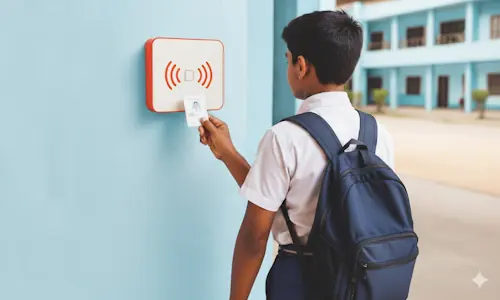
When a Beep Builds Trust: How Schools in India are Turning to RFID to Keep Parents at Peace
Every morning, Ritu Sharma’s heart races a little as she watches her 12-year-old daughter board the school bus. Like most working parents in bustling Indian cities, she juggles a packed schedule, yet her mind often drifts—Has the bus reached scho...
Continue reading about When a Beep Builds Trust: How Schools in India are Turning to RFID to Keep Parents at Peace →
Reusing Smart Cards: How Scanix Saves Money for Educational Institutes
In today’s fast-paced digital world, educational institutions are constantly looking for cost-effective solutions to streamline operations. One area where schools and colleges often face high costs is attendance management. Traditional biometric sy...
Continue reading about Reusing Smart Cards: How Scanix Saves Money for Educational Institutes →
Reducing Absenteeism: How Scanix Keeps Parents and Schools Informed
Absenteeism is a growing concern in educational institutions worldwide. Whether it’s due to illness, personal reasons, or a lack of motivation, missing school can significantly impact a student’s academic performance and overall growth. However, ...
Continue reading about Reducing Absenteeism: How Scanix Keeps Parents and Schools Informed →
Scanix for Multi-Location Institutes: Centralized Attendance Management Made Easy
In today's rapidly growing educational landscape, many institutions operate across multiple campuses or locations. While this approach offers flexibility and accessibility for students, it also brings significant challenges in terms of attendance man...
Continue reading about Scanix for Multi-Location Institutes: Centralized Attendance Management Made Easy →
How Scanix Reduces Teacher Workload and Maximizes Classroom Time
Every teacher starts their class with a crucial yet time-consuming task—marking attendance. While it may seem like a minor part of daily classroom operations, the cumulative time lost is significant. On average, a teacher spends 5 to 10 minutes cal...
Continue reading about How Scanix Reduces Teacher Workload and Maximizes Classroom Time →
Understanding RFID Technology: How Scanix Uses Smart Cards for Attendance
Radio Frequency Identification (RFID) is a wireless communication technology that uses electromagnetic fields to identify and track objects equipped with RFID tags. This system comprises three main components: an RFID tag, a reader, and a database. T...
Continue reading about Understanding RFID Technology: How Scanix Uses Smart Cards for Attendance →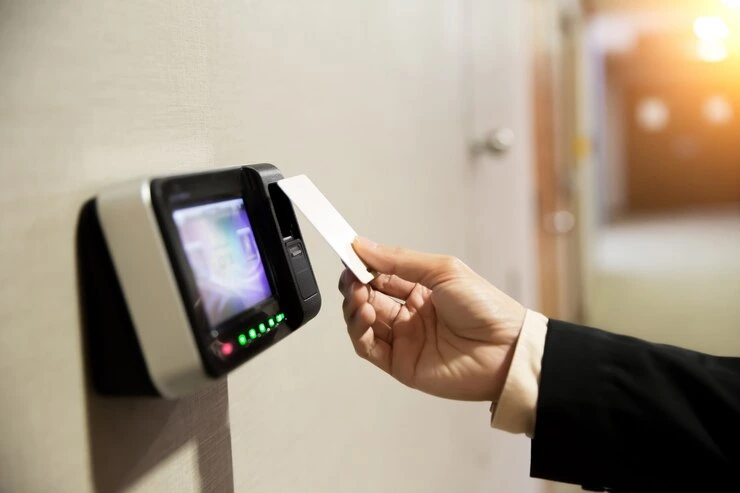
RFID Attendance System: A Smart & Efficient Way to Track Attendance
Tracking attendance has come a long way from traditional roll calls to automated RFID attendance systems. Schools, businesses, and organizations are increasingly adopting this technology for its speed, accuracy, and convenience. In this blog, we wil...
Continue reading about RFID Attendance System: A Smart & Efficient Way to Track Attendance →
Why you need an Attendance Management System for your School
Whether it is school, college or university, an attendance management system plays an important role in effective student management. With the help of automation, the institute can bring faster, smoother and better attendance processes. Attendance i...
Continue reading about Why you need an Attendance Management System for your School →
QR Attendance Solution: A Game Changer in New Education System
In educational institutions, student participation in the classroom is directly related to their academic performance. However, the majority of student attendance registration is still conventionally done, which is tedious and time-consuming, especia...
Continue reading about QR Attendance Solution: A Game Changer in New Education System →
Future of Attendance Systems in India
The future of technology is bright in India and it is improving day by day. This improved technology has improved our way of living and also our way of doing things. From marking attendance to generating reports everything has gone digital. With time...
Continue reading about Future of Attendance Systems in India →Institutes already associated with us




































Happy Clients
Channel Partners
Years of Experience
Strong Team